
What Fun Games For Kids
📖 Table of Contents
- Why Board Games Are a Must-Have for Kids
- The Power of Card Games in Family Playtime
- Interactive Games That Bring Everyone Together
- Creative Games That Encourage Imagination and Expression
- Outdoor Games That Keep Kids Active and Engaged
- Digital Games That Offer Educational and Entertaining Options
- Games That Help Kids Develop Social Skills and Emotional Intelligence
- Make It Your Way
- Frequently Asked Questions
I remember the first time my son asked me to play a board game with him. It wasn’t just any game—it was a rainy Saturday afternoon, and we were both in a mood. I hesitated, thinking of my own childhood when games were more about winning than connection. But then we sat down with a simple card game, and something shifted. We laughed, we argued, and we bonded over a deck of cards. That moment changed how I think about games for kids. They’re not just for fun; they’re for learning, for growing, and for creating memories.[1]
As a parent, I’ve spent countless hours searching for games that are both engaging and educational. I’ve tested dozens of options—some were too complicated, others too short-lived. But the best ones have stayed with us, becoming staples in our home. Whether it was a game that helped my daughter learn to count or one that encouraged teamwork, I learned that the right game can transform an ordinary day into an unforgettable one.[2]
The key to finding the best fun games for kids isn’t about finding the most expensive or the most popular. It’s about finding the ones that spark curiosity, foster creativity, and bring people together. Over the years, I’ve compiled a list of games that not only entertain but also teach valuable life skills. These are the games that have made playtime meaningful and joyful for my kids—and they might do the same for yours.
Why You'll Love This Guide to Fun Games for Kids
- Discover 20+ games that are both educational and entertaining for kids of all ages.
- Learn how to select the right game based on your child’s interests and developmental stage.
- Get practical tips on how to make game nights fun and engaging for the whole family.
- Find out which games are best for different types of events, from birthdays to family gatherings.
Why Board Games Are a Must-Have for Kids
As of September 2026, Board games have a special place in my home. They’re not just a way to pass the time; they’re a way to build skills like critical thinking, patience, and communication. I’ve seen my kids learn to count, take turns, and even handle losing gracefully through these games.[3]
One of my favorites is a game called 'Catan,' which involves resource management and strategic planning. It’s not for the youngest kids, but it’s a great option for older children who enjoy a challenge. I’ve noticed a marked improvement in my son’s problem-solving abilities since we started playing regularly.
Another game, 'Guess Who?' has become a family favorite. It’s simple, fast-paced, and perfect for younger kids. It teaches them how to ask questions, make observations, and think logically—all valuable skills for school and life.
Look for games labeled with age ranges and choose one that aligns with your child’s current developmental stage. This will help ensure they get the most out of the experience.
Part of our Adult party games games activities guide.
The Power of Card Games in Family Playtime

Card games are a staple in our family. They’re easy to set up, require little space, and can be played with just a few people or a full group. I’ve found that games like 'Uno' and 'Go Fish' are excellent for younger children, while more complex games like 'Rummy' and 'Spades' are a hit with older kids and adults alike.
One of the best things about card games is how quickly they can become a family tradition. We play at least once a week, and it’s become a time when we all come together, laugh, and relax. It’s a simple way to bond and have fun without the need for expensive equipment or a lot of space.
I’ve also noticed that card games help kids develop memory, concentration, and quick thinking. These are skills that translate well to school and everyday life, making them a valuable part of any child’s playtime.
Card games are the ultimate family fun—simple, fast, and always a hit.
Related: Best adult party games games
Related: Best adult party games games activities
Related: Easy adult party games activities
Interactive Games That Bring Everyone Together
Interactive games are a great way to bring everyone together in a shared experience. These are the types of games that involve movement, collaboration, and communication. I’ve found that games like 'Charades' and 'Pictionary' are excellent for family nights and larger gatherings.
One of my favorite interactive games is 'Guess the Word.' It’s similar to Charades but with a twist—it requires players to act out a word without speaking, while others guess. It’s hilarious, engaging, and a great way to work on non-verbal communication skills.
I’ve noticed that these types of games help children learn to express themselves, think creatively, and work as a team. They’re also a great option for parties and events where you want to keep guests entertained and involved.
If a child is hesitant to participate, assign them a role that suits their comfort level. Even the quietest child can enjoy a game if they feel included and valued.
“I remember the first time my son asked me to play a board game with him.”— Partyjinx editors
Related: Easy adult party games games activities
Related: Affordable adult party games games activities
Creative Games That Encourage Imagination and Expression
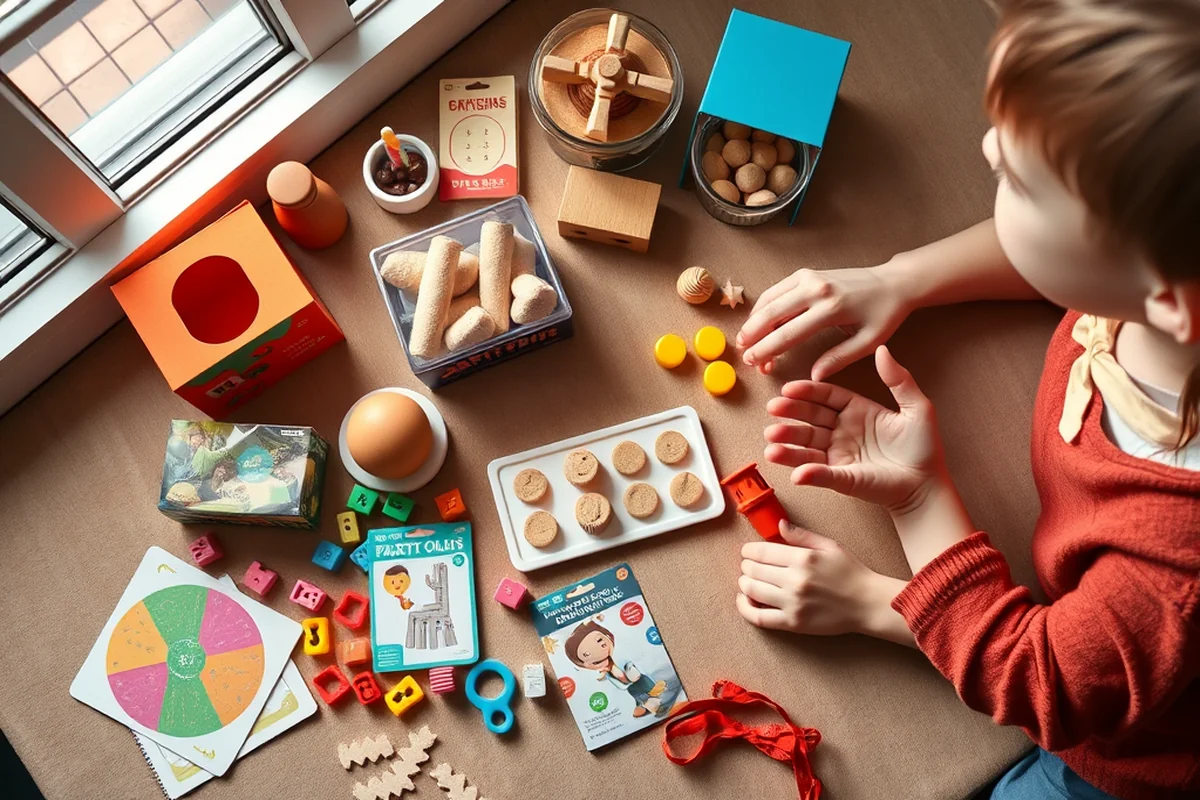
Creative games are a fantastic way for kids to explore their imagination and express themselves. These are the games that don’t follow strict rules and allow for free thinking and innovation. I’ve found that games like 'Dixit' and 'Dobble' are excellent for encouraging creativity and storytelling.
One of the most engaging games we’ve played is 'Dixit,' which involves interpreting surreal images and creating stories around them. It’s a great way for children to think creatively and develop their communication skills. I’ve seen my daughter come up with some truly imaginative stories during these games.
Another game that’s become a favorite is 'Dobble,' which challenges players to find matching symbols quickly. It’s fast-paced, fun, and a great way to improve attention to detail and reflexes. These games are perfect for kids who enjoy thinking outside the box and expressing themselves in unique ways.
Outdoor Games That Keep Kids Active and Engaged
Outdoor games are a must-have for any family that enjoys spending time outside. They’re not only a great way to keep kids active but also help them develop physical skills and coordination. I’ve found that games like 'Tag,' 'Red Light Green Light,' and 'Bocce Ball' are excellent for kids of all ages.
One of the most popular games we play is 'Bocce Ball,' which is simple to set up and can be played on a lawn or a flat surface. It’s a great way to introduce kids to the concept of teamwork and strategy. I’ve noticed that even the youngest members of our family enjoy playing this game, and it’s become a regular part of our summer days.
Another favorite is 'Tag,' which is a classic game that never gets old. It’s fast-paced, fun, and a great way to burn off energy. Whether we’re playing in the backyard or at the park, these games have become a regular part of our family’s outdoor time.
Digital Games That Offer Educational and Entertaining Options
Digital games are a growing trend in family entertainment, offering a unique blend of education and fun. These are the games that can be played on a tablet, phone, or computer and often include interactive elements that help kids learn while they play. I’ve found that games like 'Minecraft' and 'Kerbal Space Program' are excellent for encouraging creativity and problem-solving.
One of the most engaging digital games we’ve played is 'Minecraft,' which allows kids to build and explore virtual worlds. It’s a great way to introduce them to concepts like architecture, engineering, and basic physics. I’ve seen my son spend hours building elaborate structures and learning about different materials and tools.
Another favorite is 'Kerbal Space Program,' which teaches kids about space exploration, rocket science, and physics. It’s a highly educational game that keeps kids engaged and excited about learning. These digital games are a great option for families who enjoy a mix of education and entertainment.
Digital games aren’t just for kids—they’re a great way to spark curiosity and learn new things.
Games That Help Kids Develop Social Skills and Emotional Intelligence
Games that promote social skills and emotional intelligence are essential for a child’s development. These are the games that encourage empathy, communication, and conflict resolution. I’ve found that games like 'The Sneaky, Snacky Squirrel Game' and 'Emotion Dice' are excellent for teaching kids how to express their feelings and understand others.
One of the most effective games we’ve played is 'Emotion Dice,' which helps kids recognize and name different emotions. It’s a great way to introduce them to emotional intelligence and help them understand their own feelings and the feelings of others. I’ve seen my daughter become more empathetic and better at managing her emotions after playing this game.
Another game that’s helped us is 'The Sneaky, Snacky Squirrel Game,' which involves using tweezers to collect acorns. It’s a great way to develop fine motor skills and teach kids the importance of patience and perseverance. These games are a great way to help children grow emotionally and socially.
💰 Budget-Friendly Game Night
Host a game night without breaking the bank by choosing affordable games and using what you already have.
🏠 Small-Space Playtime
Find games that are perfect for small spaces, such as card games, puzzle games, or cooperative board games.
🌳 Outdoor Adventure Day
Plan an outdoor game day with games like tag, frisbee, and bocce ball to keep kids active and entertained.
🍷 Grown-Up Version of Family Game Night
Host a more mature version of family game night with games that are suitable for adults and older children.
💤 Low-Effort Playtime
Choose games that require minimal setup and are easy to play, perfect for busy days or tired kids.
| The mistake | Why it happens | The fix |
|---|---|---|
| Choosing a game that’s too complex for a child’s age. | This can lead to frustration and disinterest, making the game less effective and less enjoyable. | Select a game that’s age-appropriate and matches the child’s developmental stage. Look for games with clear instructions and simple rules. |
| Forcing a child to play a game they’re not interested in. | This can create negative associations with games and reduce their willingness to participate in future playtime. | Let the child choose the game they want to play. Encourage them to explore different types of games and find what they enjoy most. |
| Not preparing the game area properly. | A cluttered or poorly set-up game area can lead to distractions and reduce the enjoyment of the game. | Create a dedicated space for playing games, free from distractions. Ensure all necessary materials are ready and organized before starting. |
| Ignoring the importance of taking turns and respecting others during play. | This can lead to conflicts and a lack of cooperation, reducing the social benefits of playing games. | Teach kids the importance of taking turns, respecting others, and following the rules. Model good behavior and encourage cooperation during play. |
What Fun Games For Kids
Common Questions
What are some good games for kids under 5 years old?
How do I choose the right game for my child’s age?
Are digital games a good option for kids?
What are some good games for large groups of kids?
References
- Board Games - Provo Library (provolibrary.gov)
- Videogame prepares students to learn about statistics, Stanford ... (ed.stanford.edu)
- The Powerful Role of Play in Early Education (cde.ca.gov)
Cite this guide
Partyjinx (2026). What Fun Games For Kids. https://partyjinx.com/what-fun-games-for-kids/
Feel free to cite or share this guide.